
Reformer Balance
The Reformer, a Pilates machine that looks intimidating at first glance, offers an effective workout for people of all fitness levels. The machine combines traditional exercises with a sliding carriage and adjustable springs to create different challenges in each session, making it ideal for individuals of varied body sizes and skill levels. It also provides immediate feedback from the machine to inform you if you need to pay attention, shift your position, adjust the springs or change the movement.
The design of the Reformer incorporates instability into your workouts, challenging you to tighten your control and engage your core as you move with the rolling carriage. Depending on the exercise, even workouts with a lighter spring setting can become more difficult as they require increased core engagement and greater balance. This helps to strengthen your deep core muscles, which in turn supports your balance, posture and overall health.
In addition to the instability, the Reformer offers another way to challenge your balance – by moving you into an unfamiliar position. Unlike the mat-based Pilates workouts, which offer a variety of balancing poses, the moving carriage on the reformer adds a dynamic element that requires greater core involvement and coordination. The Reformer also uses long ropes with loop handles attached to pulleys that run from the carriage to your hands or feet for some exercises. By pushing or pulling on the ropes, you can produce a movement of the carriage that feels a bit like rowing a boat.
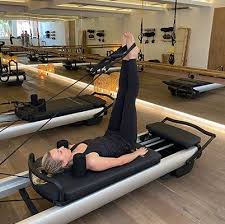
Can the Reformer Help With Balance?
Reformer lessons are often more individualized than mat-based sessions, which can be crowded and less structured. The instructor can adjust the equipment and your body location in real-time to make sure you are using the best form, ensuring safety and effectiveness. This individualized training can help you build confidence in the movements and build up your ability to perform them in a more dynamic environment.
In addition to building strength, flexibility and coordination, the Reformer can also help improve your posture by encouraging good alignment of the spine and pelvic floor. Many of the same exercises used on the reformer to strengthen these muscles are also utilized in mat-based sessions. Having strong, balanced muscles throughout the entire body can help with your posture and balance, no matter which style of Pilates you practice.
Pilates is a full-body workout that engages the deep abdominal and back muscles to support your core. This creates a stable center from which your other muscle groups can move, and is the foundation of Pilates. On the Reformer, the sliding carriage and adjustable springs allow you to increase or decrease the difficulty of your workout as you get stronger. This gradation of intensity is known as the “time under tension,” and it is a key factor in generating Pilates’ famous toned physique.
If you are new to reformer, be sure to start with private sessions or beginner classes to build up your confidence before jumping into a group class. Although the reformer can feel awkward and unnatural at first, with a supportive teacher and gentle movements you will soon find yourself moving with ease.


