
automation play in circuit board assembly companies
In the dynamic landscape of circuit board assembly, automation has emerged as a transformative force, reshaping the way companies approach production processes. From streamlining workflows to enhancing precision and scalability, automation plays a multifaceted role in driving efficiency and innovation across the industry. This article explores the pivotal role of automation in circuit board assembly companies and its impact on productivity, quality, and competitiveness.
At the heart of automation’s influence lies its ability to optimize repetitive tasks and reduce reliance on manual labor. In the context of circuit board assembly, automation encompasses a spectrum of technologies and systems, including robotic pick-and-place machines, automated soldering systems, vision inspection systems, and conveyor-based assembly lines. These advanced tools and machinery enable companies to accelerate production cycles, minimize human error, and achieve consistent quality standards with unparalleled precision.
One of the primary benefits of automation in circuit board assembly companies is its capacity to enhance throughput and productivity. By automating time-consuming processes such as component placement, soldering, and inspection, companies can significantly increase the speed at which circuit boards are assembled without compromising on quality. This not only enables faster turnaround times for customer orders but also enhances the overall efficiency of production operations, allowing companies to meet growing demand and capitalize on market opportunities.
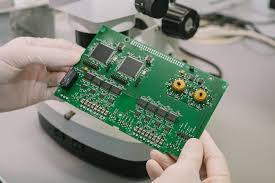
What role does automation play in circuit board assembly companies?
Furthermore, automation plays a crucial role in improving the quality and reliability of circuit board assemblies. Unlike manual assembly methods, which are prone to inconsistencies and errors, automated systems offer unparalleled accuracy and repeatability. Robotic pick-and-place machines, for example, can precisely position components with micron-level precision, ensuring optimal soldering connections and minimizing the risk of defects or malfunctions. Similarly, automated inspection systems utilize advanced imaging technology to detect defects and anomalies with unmatched speed and accuracy, enabling companies to maintain stringent quality control standards throughout the production process.
Moreover, automation enables circuit board assembly companies to achieve greater flexibility and adaptability in response to changing market dynamics and customer requirements. Modern automated systems are designed to accommodate a wide range of component sizes, shapes, and configurations, allowing companies to quickly reconfigure production lines and switch between different product variants with minimal downtime. This agility not only enhances operational efficiency but also positions companies to capitalize on emerging trends and customer preferences in the fast-paced electronics industry.
In addition to improving efficiency and quality, automation plays a vital role in reducing costs and enhancing competitiveness for circuit board assembly companies. While the initial investment in automation equipment may be significant, the long-term benefits in terms of labor savings, scrap reduction, and increased throughput far outweigh the upfront expenses. By automating repetitive tasks and optimizing production workflows, companies can achieve economies of scale, lower manufacturing costs, and maintain a competitive edge in an increasingly globalized market.
Furthermore, automation empowers circuit board assembly companies to elevate their environmental sustainability efforts by minimizing waste, reducing energy consumption, and optimizing resource utilization. Automated systems are designed to operate with high efficiency and precision, minimizing material wastage and energy consumption compared to traditional manual assembly methods. Additionally, automated inspection systems can identify and rectify defects early in the production process, reducing the likelihood of scrapped or reworked boards and conserving valuable resources.
In conclusion, automation is a game-changer in the realm of circuit board assembly, revolutionizing production processes and driving unprecedented levels of efficiency, quality, and competitiveness. By leveraging advanced technologies and systems to automate repetitive tasks, enhance throughput, improve quality control, and reduce costs, circuit board assembly companies can position themselves for sustained success in a rapidly evolving industry landscape. Embracing automation isn’t just a strategic choice—it’s an imperative for companies looking to thrive in the digital age.


